
Viking Therapeutics (VKTX): Repricing VK2735
Separating the SC valuation floor from the unresolved oral opportunity through a reverse-solve valuation framework and a ~608,000-patient crossover analysis.

Viking Therapeutics (VKTX) shed roughly $2.3B of fully diluted market value in a single session on August 19, 2025, when the VENTURE-Oral Phase 2 topline reported a 28% discontinuation rate (D/C). That reaction reset the investment debate. The market removed most of the value attached to the oral program while leaving the subcutaneous asset intact — the first sign investors were already pricing two separate businesses inside one company. Nearly a year later, VKTX trades at ~$3.95B fully diluted (~$3.45B ex-cash EV on a TSM-diluted basis; ~$3.30B on basic shares), still trapped between those two narratives.
We estimate the subcutaneous (SubQ; SC) formulation of VK2735 alone supports 66% of the ~$3.45B ex-cash EV in our base case and treat that as a defensible floor, which makes the market’s hesitation rational. Whether VK2735 carries enough commercial differentiation to justify value above that floor remains open, and all major catalysts over the next 12-18 months — the 3Q26 maintenance readout, the 4Q26 oral Ph3 dose/trial design disclosures, VANQUISH execution into 2027 — tests that one proposition. Oral optimization drives the upside rather than survival, and we build the valuation from the SC asset up.
VKTX sits in an unusually low-conviction equilibrium: downside constrained by the SC franchise, upside constrained by unresolved oral development strategy. We think the market prices VKTX roughly fairly today but underestimates how little additional evidence would begin restoring differentiation value. The next valuation input is a development decision Viking has not yet disclosed — the oral Ph3 top dose — not a clinical endpoint.
Stock Call (Tactical):
We view VKTX as approximately fairly valued, range bound in the near term post 2Q26 print based on the current balance between a well-supported subcutaneous SC franchise and unresolved oral differentiation.
Portfolio perspective: modestly negative near-term skew.
Over the next 3–6 months, the catalyst distribution appears asymmetric: investors are unlikely to assign meaningful incremental value to the oral program before management discloses the Phase 3 dose and development strategy, while intermediate updates are more likely to reinforce uncertainty than resolve it. As a result, we would expect the stock to remain broadly range-bound, with the next meaningful repricing more likely to test the SC-supported valuation floor (~$26/share; ~20% downside) than reflect a differentiated oral commercial profile absent new evidence. Residual value below that floor would increasingly reflect earlier-stage pipeline optionality and cash rather than the obesity franchise itself.
I. Where Current Valuation Leaves the VK2735 SC–Oral Debate
Current valuation largely settles the SC question. The remaining debate is oral differentiation. VKTX trades at an ex-cash EV of $3.45B ($3.95B fully diluted; ~$502M 2Q26 net cash), implying the market has largely priced the SC franchise while assigning relatively little value to unresolved oral differentiation. Current valuation reflects two judgments: one the market has largely made — the SC franchise — and one it has deliberately deferred — oral differentiation.
Stock Positioning: Short interest is stale, not building. As of July 15, ~23.2mm shares were short (~21% of float, ~8-9 days to cover) — essentially unchanged from ~23.3mm M/M, even as VKTX fell ~18% between July 1 and Aug 3. Shorts aren’t pressing the move; the decline reads as long unwind, not fresh bearish conviction. Stock is flat YTD: range bound around $30/sh though spiked in the 1st week of July, has since given back all of it. Positioning is consistent with the market sitting on its hands ahead of the actual variable — the oral Ph3 dose — rather than changing its view.
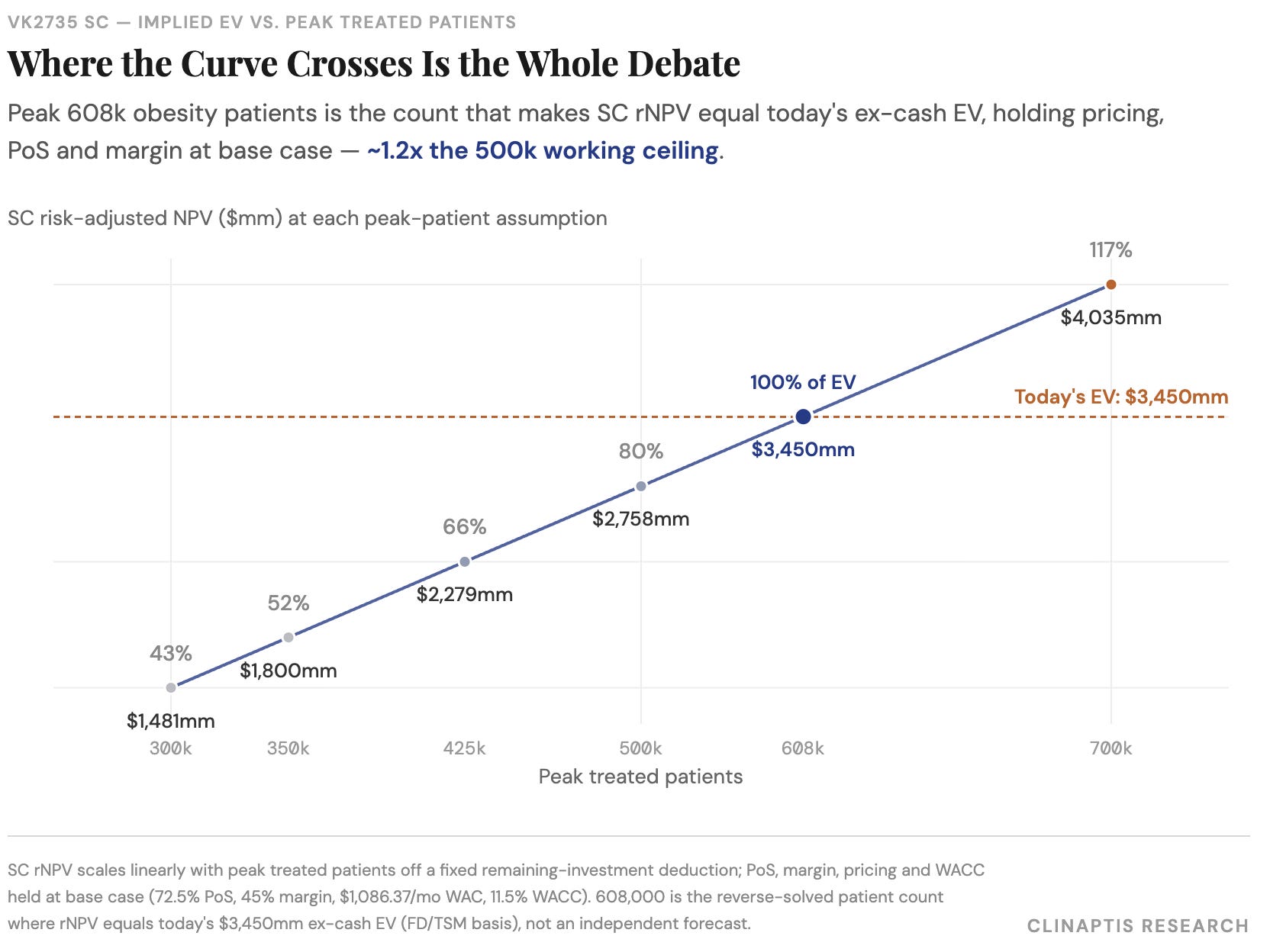
Sensitivity Check. On a 425,000-patient base case, SC alone supports 66% of today’s EV — a defensible floor built on reasonable, checkable assumptions (see implied EV figure). Fully bridging today’s EV requires ~608,000 peak patients—roughly 40% above our primary 425,000-patient framework, though only ~20% above our optimistic 500,000-patient sensitivity. A modest overshoot rather than a structural mismatch. Downside is constrained by that floor; upside is pending on evidence that does not yet exist. The oral formulation optionality is sensitive to a key unknown — the Ph3 top dose, Co. management point toward the 45-75 mg region whose efficacy against the competitor bar no existing data settles. Maintenance data is still months out, VANQUISH is enrolled with extension studies planned, rather than readout, and comparable functional molecular receptor data (GLP/GIP agonism) remain unpublished. The market is not paying for differentiation it cannot yet observe.
Three considerations continue to constrain a near-term re-rating:
Takeout value has become a smaller part of the investment case. This is our judgment rather than an empirically testable conclusion. Strategic scarcity has declined as large pharma secured multiple avenues into bolster R&D obesity assets in their portfolios. Pfizer’s ~$10B Metsera acquisition, Roche-Zealand partnership for amylin agonist petrelintide illustrate the broader trend. Acquisition remains possible, but we view takeout as a smaller contributor to VKTX’s valuation than it was when differentiated obesity assets were materially scarcer in 2024.
The competitive bar keeps rising. Ph2 data across oral GLP-1s, amylin analogues and glucagon-based incretins have reinforced, not weakened, the benchmarks Lilly and Novo set. VK2735 retains credible differentiation paths, but nothing in the external dataset yet justifies pricing it ahead of confirmatory evidence.
The burden of proof now sits with Viking. Most 2H26 updates will confirm execution, not create new value — and execution that’s already expected gets poorly rewarded. Delays, weaker execution or favorable competitor read-throughs remain easier sources of estimate revision than upside surprises, at least until the oral Ph3 dose disclosure — the single most important unresolved catalyst.
Current valuation prices the SC franchise and little else. That gap is either justified or it isn’t — and the market may be demanding more evidence than commercial reality will end up requiring.
II. How Much Is the SC 2735 Franchise Worth?
The market may have stopped talking about the injectable. The valuation hasn’t. VK2735 first created value on Feb 27, 2024, when Viking announced 13.1% placebo-adjusted WL at 13 weeks in the Ph2 VENTURE trial — one of the sector’s strongest early obesity datasets, and market rewarded +120% move. That was well before the oral program became the dominant investment debate. Today’s debate centers on the oral formulation, even though the same SC dataset that produced VKTX’s original re-rating still supports the bulk of valuation. Because the SC asset remains fundamentally unchanged since that print, the first question is what it is worth on a standalone basis.
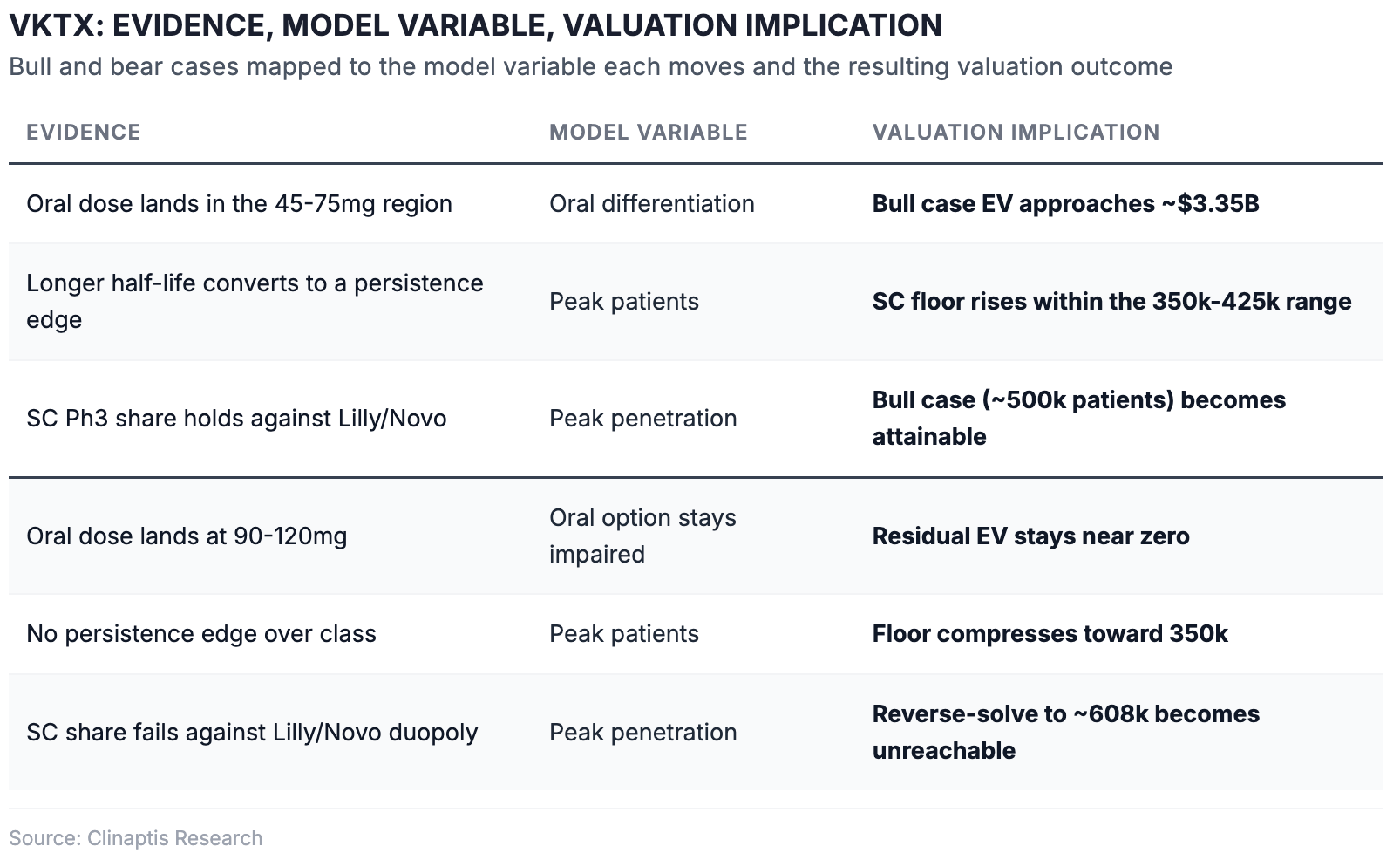
On our framework, SC alone supports 66% of today’s ex-cash EV. That figure is built from Clinaptis’s analog precedents — 350,000 to 425,000 peak treated patients, drawn from DPP-4, DOAC and PCSK9i drug class precedents for late-entrant franchises. We couple probability of success (PoS), peak share, persistence and margin off one narrative rather than sensitizing them independently: a bear case covers 36% of EV; a bull case covers ~97%, nearly the entire EV on SC alone. The defensible base sits closer to two-thirds of EV than one-third (Table rNPV below).
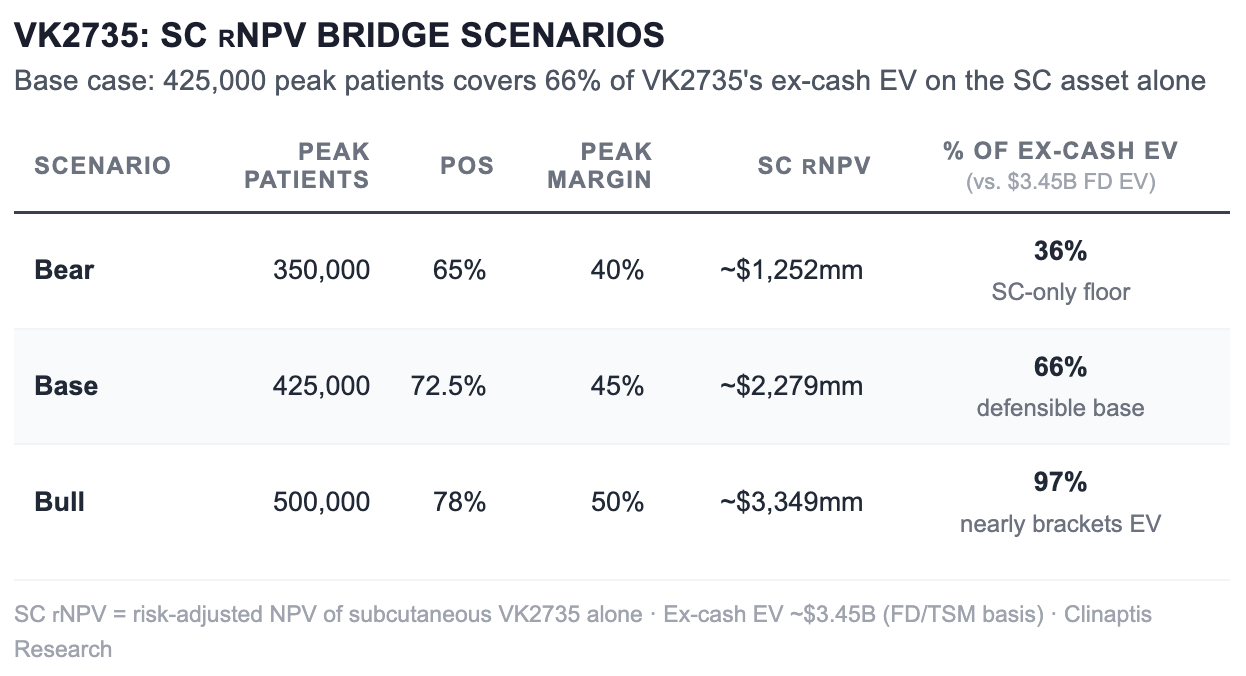
Sensitizing PoS, peak share and margin independently — rather than off one narrative — produces the 52-66% range below. Unmodeled pipeline value and a soft M&A premium would raise total EV without adding to SC rNPV, pulling SC’s share of EV lower, not higher. We anchor the range below 66% for that reason: a deliberately conservative bound, not an independent estimate.
A bottom-up build — TAM, generic-sema erosion, peak share, persistence — reaches the same 350,000-425,000 patient range independently, confirming the framework isn’t just precedent-matching. The Aug 2025 crash destroyed roughly the same dollar amount as today’s residual, suggesting the market once priced the oral story in that range — and has since priced most of it back out. That leaves one question: if SC covers most of today’s valuation, why did one oral readout erase ~$2.3B in a session?
III. How the Market Arrived at Today’s Valuation
The Aug 2025 selloff did not happen in isolation. It arrived after 18 months in which both VK2735 and the obesity category repeatedly reset commercial expectations. The timeline below shows what the market successively learned — and repriced (VKTX relevant).
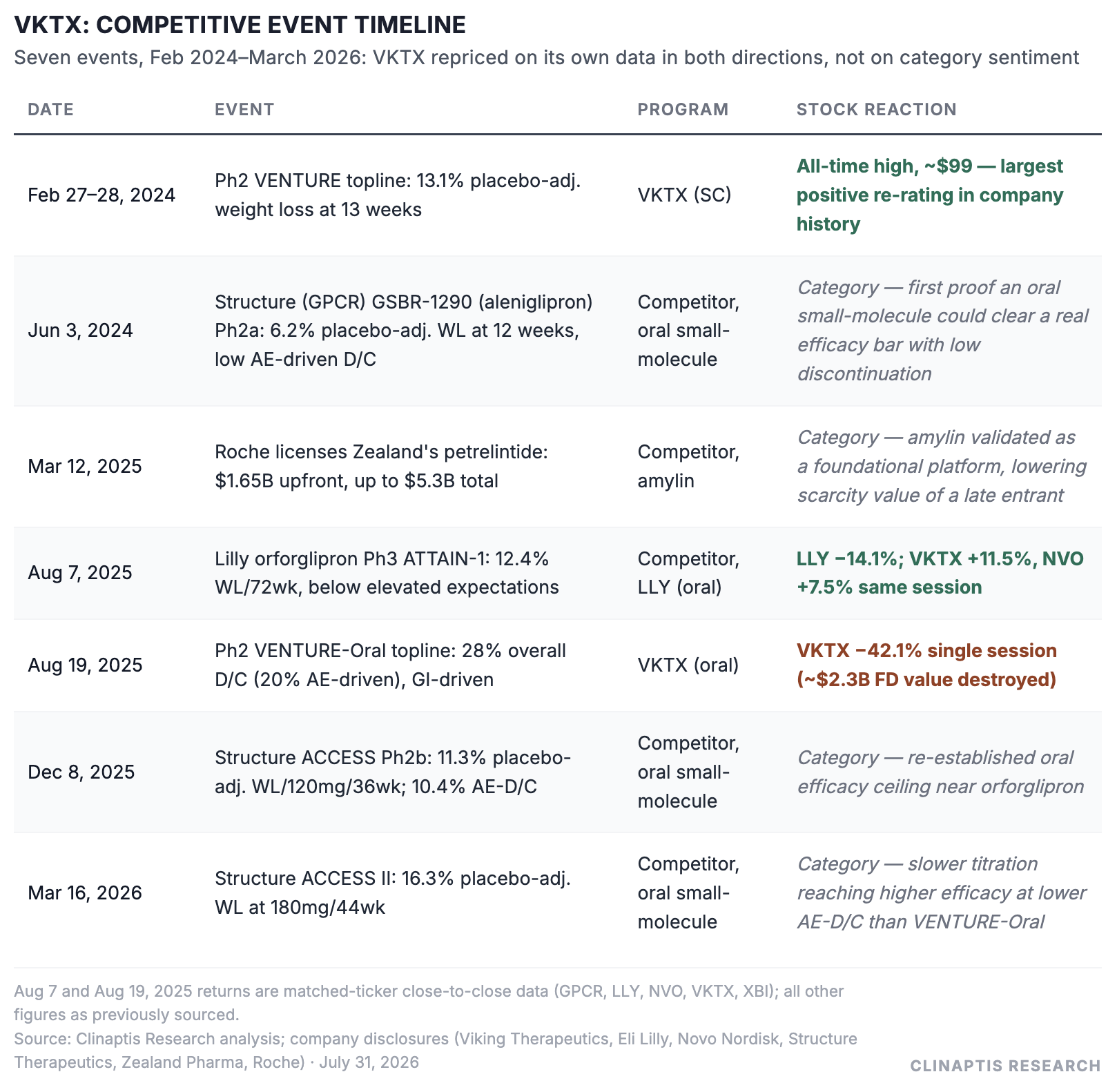
The crash was sponsor-specific, not sector beta.
Aug 7: Lilly’s ATTAIN-1 miss sent LLY down while VKTX and NVO rose — sector index flat.
Aug 19: VKTX alone fell sharply on its own VENTURE-Oral data, while Lilly, Novo and the sector held flat.
Three independent developments steadily raised the commercial hurdle VK2735 had to clear. Oral efficacy became credible, alternative mechanisms attracted strategic capital, and later oral datasets showed tolerability could improve through protocol optimization rather than molecule design alone.
Nothing in this sequence materially changed the SC dataset. It changed how the market valued the oral option. The upcoming section, analytical and more dense, discusses whether the market correctly interpreted the VENTURE-Oral dataset — or simply priced the headline discontinuation (D/C) rate.
IV. Can VK2735 Take Meaningful Share?
No new SC efficacy data has emerged since the original Ph2 readout; VANQUISH-1 and -2 are execution milestones, not efficacy readouts. The commercial question has overtaken the clinical one.
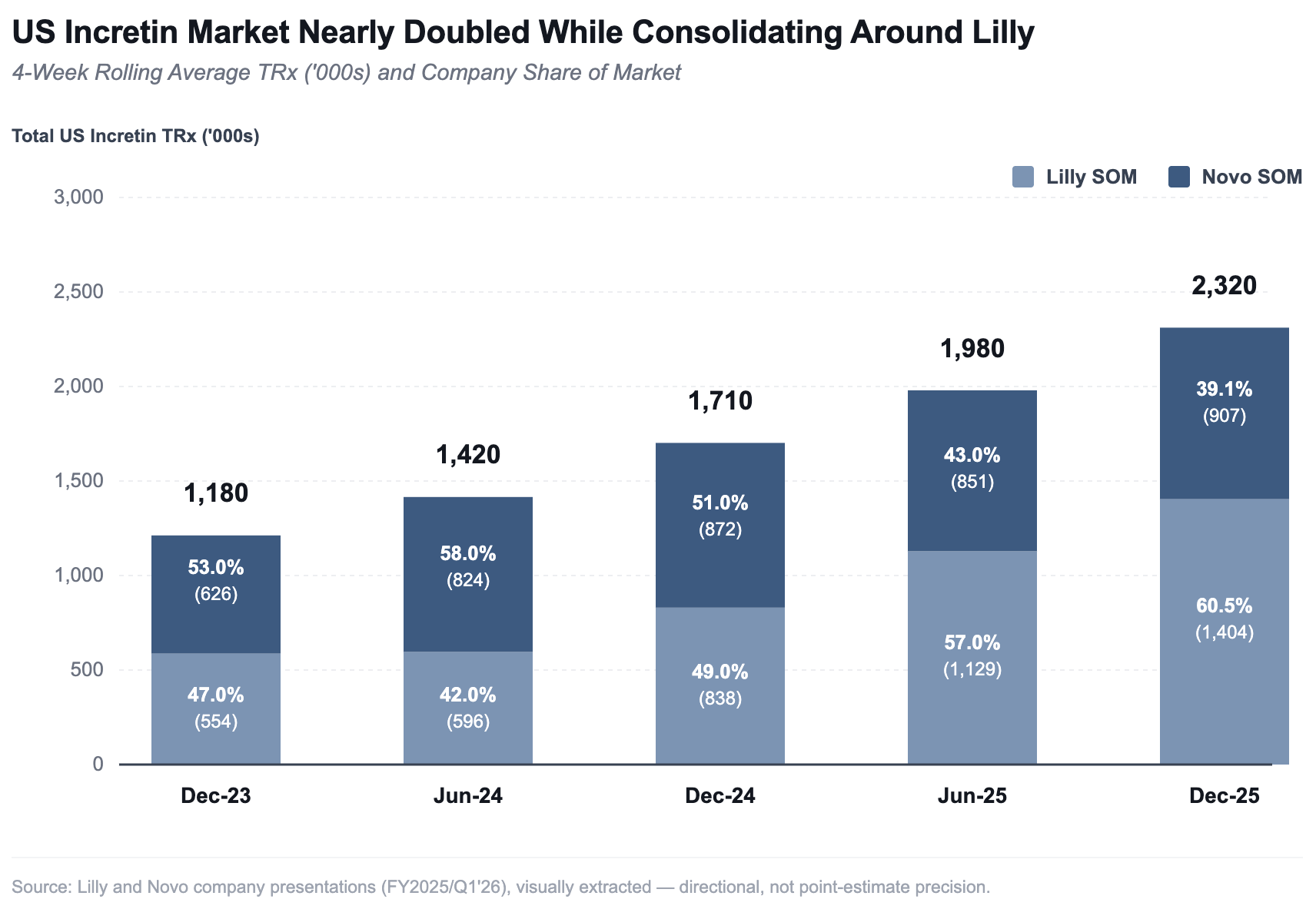
The peak-share assumption is easier to defend on paper than against the tape. Viking is modeling against a fast-growing, two-horse race that neither Lilly (LLY) nor Novo Nordisk (NVO) shows any sign of ceding, and VK2735 doesn’t yet appear as a line item in either company’s share disclosures.
The market roughly doubled in two years (40% CAGR), and Lilly’s share climbed steadily through the entire window — including the August 2025 crash — with no visible deceleration around VKTX-specific news. That’s a sobering cross-check: our 350,000-500,000 peak-patient range assumes VK2735 carves share from an accelerating duopoly, a claim no current trend supports. The analog precedent says a modestly-differentiated third mover can still take single-digit-to-teens branded share in a payer-constrained category — but VK2735 has no approved product yet, so the market’s 2025-26 trajectory offers no direct evidence either way.
Novo’s Wegovy pill reinforces the stakes: 1M prescriptions in 12 weeks, 3M within ~5 months of its January 2026 launch — one of the fastest obesity-drug launches on record. VK2735-Oral has to out-launch an incumbent, not a newcomer.
Growth alone can’t justify the peak-share assumption. Whether VK2735 takes share turns on two things growth data can’t show: how often patients switch branded incretins once started, and whether payers grant a third product access at all.
The opportunity is new starts, not incumbent conversion. VK2735 doesn’t need to win existing patients first — it needs to win the next wave of treated patients. Three datasets converge on this:
Switching is low and persistence is rising. Prime Therapeutics found only 11.1% of 4,066 commercially insured GLP-1 initiators (2021 cohort) switched products within a year. Persistence has since climbed sharply, from 33.2% (2021 initiators) to 62.6% (2024 initiators) — today’s patients run stickier than this study’s base rate.
The untreated-but-covered pool dwarfs the treated base. Novo’s latest access data show ~50mm people with Wegovy coverage in the US against >2.5mm patients actually treated in 2025 — a >47mm covered-but-untreated gap. Its 2026 Wegovy pill launch confirms the pattern: >80% of new scripts came from patients new to GLP-1 therapy, not injectable switchers.
Category growth continued through share stabilization. TRx kept growing through 2025-26 even as Zepbound’s share stabilized — consistent with market expansion, not continued share transfer.
Together, this argues for modeling VK2735’s peak share as new-eligible starts plus payer-directed switching, with organic switching as a secondary contributor — not a hard 10-15% ceiling, which the Prime cohort predates today’s more mature, higher-persistence market and can’t support on its own.
Access is a separate gate from clinical differentiation. CVS Caremark excluded Zepbound from its preferred formularies in July 2025 despite superior efficacy, then reinstated it as co-preferred in October 2026 — access follows contracting, not efficacy alone. The Medicare GLP-1 Bridge program (July 2026-Dec 2027) covers Wegovy, Zepbound and Foundayo at a negotiated $245/month net price with a $50 copay — broad access follows substantial price concessions. Market growth doesn’t guarantee reimbursed access for every entrant.
What this means for the model. These dynamics moderate the bottom-up build, not the central thesis. A 33% cumulative sema-LOE price-erosion assumption leaves a 2035 post-erosion branded market of ~4.33mm patients; a further ~15% access haircut requires VK2735 to capture 8.4% of that pool to reach 363,000 peak patients. Bear/base/bull outputs of ~269k/363k/428k sit 14-23% below the primary Table 2 scenarios — close to the 425,000-patient base case from Section II. This is a haircut to expected penetration, not to the thesis.
Why not Mounjaro? Mounjaro’s frequently-cited ~24% share (late 2023) rising toward ~50% (early 2026) is a type 2 diabetes share, not obesity — Zepbound’s obesity share sits in the low-60s% on Lilly’s own reporting basis, closer to the high-50s% all-channel. Different indication, reimbursement dynamics and persistence make the comparison non-transferable. Mounjaro is a useful precedent for execution speed, not for VK2735’s eventual share.
Whether Viking earns that access depends on one question: does VENTURE-Oral’s 28% discontinuation rate reflect the molecule or the development strategy?
V. Was VENTURE-Oral Misread?
The market treated VENTURE-Oral’s 28% discontinuation rate as a molecular limitation. The Ph2 dataset supports a narrower read: it describes one development protocol, not a fixed property of VK2735.
Novo’s oral semaglutide reached 25mg through a gradual ~12-week escalation, with only a ~1pt excess AE-driven discontinuation over placebo in OASIS-4 (6.9% vs. 5.9%). VENTURE-Oral instead tested six fixed dose arms (placebo, 15/30/60/90/120mg) over a similar duration — raising the question of whether the GI burden reflects the molecule or the protocol.
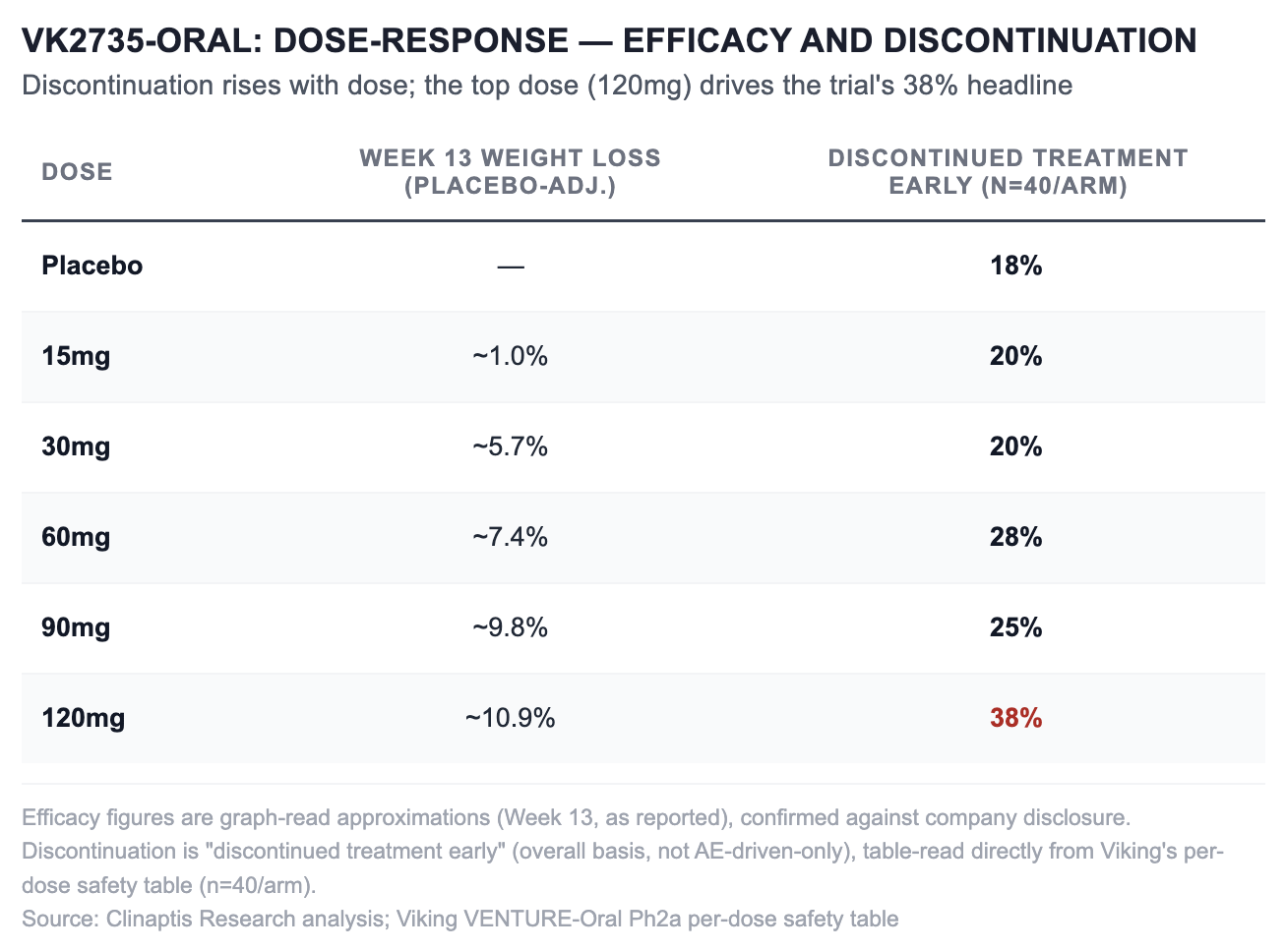
GI toxicity clustered around escalation, not maintenance. Nausea peaked at Week 1 (~34%) and fell to ~3% by Week 8, despite patients sitting at their highest maintenance doses by then; vomiting followed the same arc, ~7% to under 1%. A cumulative TEAE table can’t distinguish a patient with one bad escalation week from one with lasting intolerance — but the within-trial timing argues for the former by mid-trial. Two outside data points corroborate: Viking’s Ph1 FIH study, on gentler titration, produced ~7% early discontinuation with no severe GI, and VENTURE’s SC 15mg arm — started at 5mg rather than 2.5mg — showed worse GI than the lower-started 10mg arm. Per the trial’s own authors, that’s starting dose, not the molecule.
If gradual titration in Ph3 still produces similar GI discontinuation, the protocol hypothesis weakens and the burden shifts back to the molecule. The next section takes this further — from “the burden is fixable” to which dose Viking is actually optimizing toward.
VI. What Dose Is Viking Really Optimizing For?
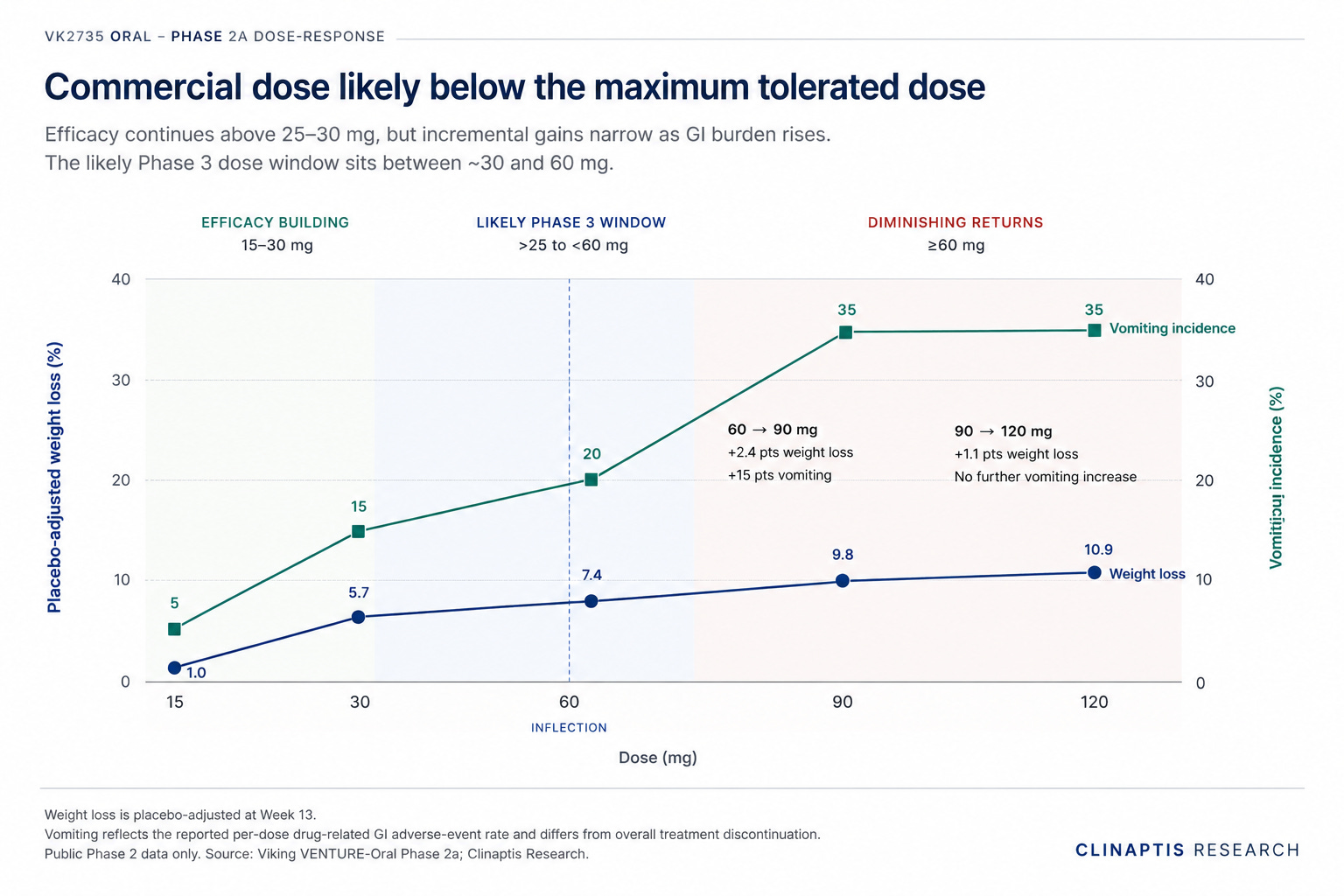
The market treated the 28% discontinuation rate as an intrinsic molecular limit. Figure A supports a different read: the commercially optimal dose likely sits below the maximum tolerated dose. The question is whether Viking’s own development choices point the same way.
Figure A identifies the commercial trade-off, not the maximum tolerated dose. Incremental efficacy persists beyond 60mg, but increasingly at the cost of GI burden, while overall discontinuation peaks at 120mg (Table 6). That divergence, not any single dose, motivates the reconstructed optimization region.
Viking’s subsequent choices point in the same direction. Investor materials place future development at ~20-75mg, excluding 90mg and 120mg. A maintenance arm titrated to 90mg then dropped to 30mg. Ph3 confirmed a four-week titration cadence. And on the 2Q26 call (July 29), management steered attention to maintenance and persistence over maximal Week-13 weight loss. No single data point identifies the objective — together, they’re hard to reconcile with pure efficacy maximization and point toward commercial optimization in roughly the 45-75mg region.
Structure Therapeutics (GPCR) shows the same pattern with aleniglipron: heavy escalation-phase GI in ACCESS Ph2b, followed by gentler titration that cut continuation-cohort discontinuation to 2-4%. Part of that improvement is optimization, part is survivorship — later cohorts skew toward prior tolerators, so the magnitude doesn’t transfer cleanly. But two molecules with escalation-loaded GI raises confidence that titration moves the tolerability frontier generally. The Viking reconstruction stands on its own disclosed choices regardless of GPCR; the precedent adds confidence, not the case itself.
The reconstruction produces a dated, falsifiable prediction. A Ph3 top dose within 45-75mg validates the commercial optimization thesis. A 90-120mg design implies Viking is optimizing on information outside the public dataset (this reconstruction rests on public Ph2 disclosures, not Viking’s internal exposure-response data). The oral Ph3 protocol — not the efficacy readout years later — is where this debate first resolves.
VII. Why Hasn’t the Market Priced This Yet?
SC and oral update the same belief, even though they’re valued separately. A disappointing oral read doesn’t mechanically weaken the SC rNPV — different PK, formulation and competitive set let SC succeed even if oral disappoints — but both formulations inform the same shared prior: confidence that VK2735 is genuinely differentiated.
The residual — 34% of EV in our base case, wider under bear/bull sensitivity — is a model output, not a market signal, as established in Section II. One cross-check: the August 2025 crash destroyed roughly the same dollar amount, consistent with the market having priced something in that range for the non-SC story before the tolerability data hit, and pricing most of it back out since.
The reconstructed 45-75mg region is commercially plausible but clinically unvalidated. VK2735-Oral is the only oral GIP/GLP-1 dual agonist confirmed for Ph3 in obesity, giving the bull a stronger mechanistic starting point than current valuation credits — but whether efficacy remains competitive at 45-75mg against the oral bar is the single unresolved question, and Viking’s 2Q26 rhetoric (”no meaningful GI difference versus placebo,” without disclosing which doses were pooled) hasn’t resolved it.
Only one event resolves that uncertainty: the 4Q26 oral Ph3 dose disclosure. Until then, oral’s incremental value is a binary paying off on a single future disclosure, and the residual trades at a substantial discount to a successful outcome because the development decision that would resolve it remains undisclosed.
VIII. What Would Falsify This Thesis
This framework does not price Viking’s earlier-stage pipeline or independently assess the ongoing SC maintenance trial — both are flagged in Appendix [D], not modeled here. What follows are the three falsifiable legs of the thesis as constructed. This is a reproducible starting point, not a conviction call. Three legs, each independently falsifiable:
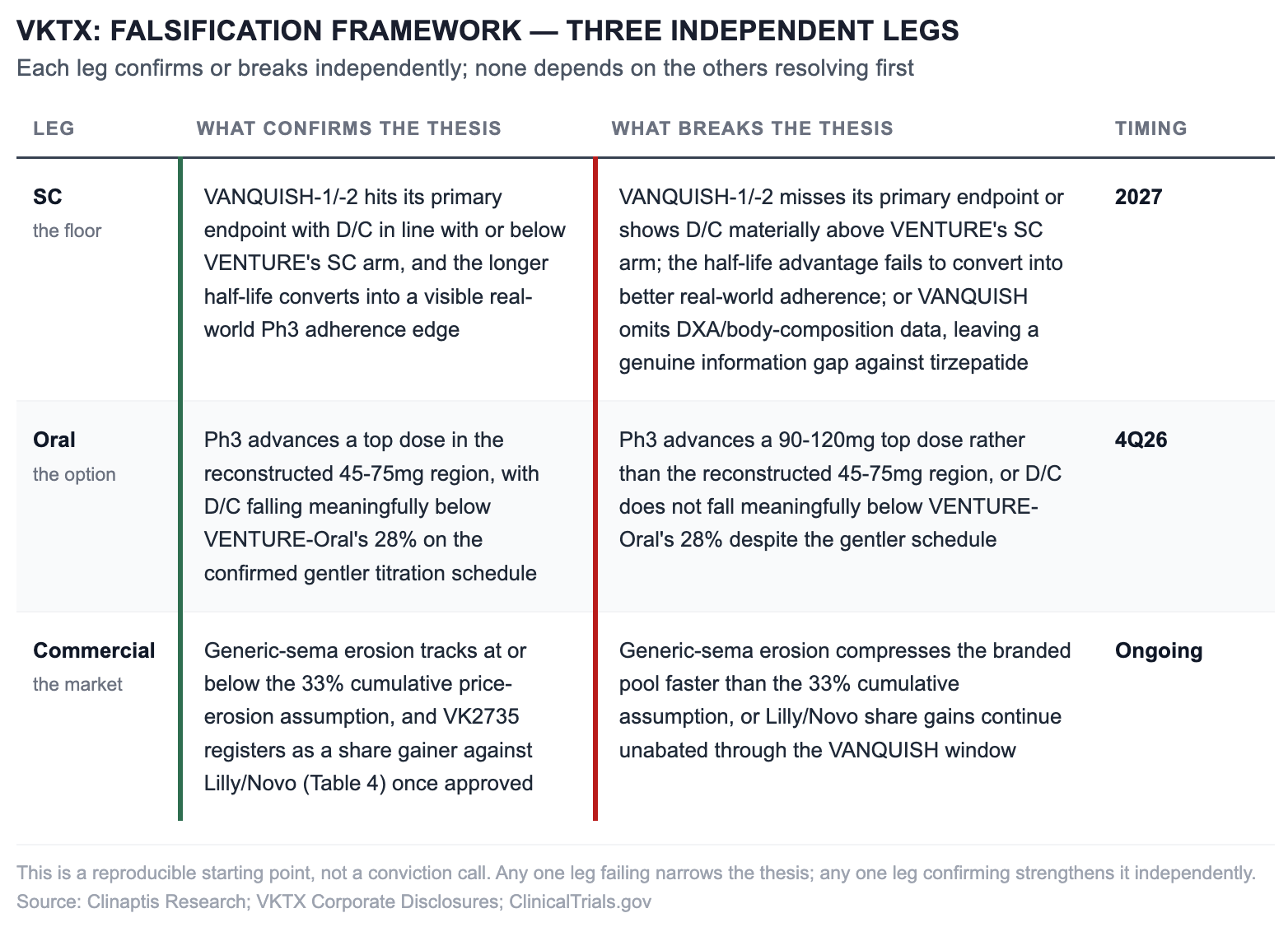
Any one leg failing narrows the thesis; none of the three depends on the others.
IX. The Near-Term Catalyst Path
Nearly all uncertainty in this framework resolves before year-end 2026, through two dated events. The 3Q26 SC maintenance update tests whether the longer half-life converts into a persistence advantage, strengthening the valuation floor. The 4Q26 oral Ph3 protocol is the higher-conviction catalyst: a top dose in the reconstructed 45-75mg region supports the commercial optimization thesis; a 90-120mg design reinforces the market’s current fixed-molecule read. Together, these two disclosures should determine whether most of today’s ~$1.2-1.7B residual value gets realized or stays discounted. ObesityWeek (November 14-17, 2026, Washington DC) is the most likely venue for the year’s decisive updates — the full catalyst framework, mapping each event to a model variable, is in Appendix B.
X. Bottom Line
The SC asset alone covers 66% of today’s fully diluted ~$3.45B EV in our base case (425k peak patients); fully bridging that EV requires ~608,000 peak patients, ~1.2x our current bull case. The market is pricing uncertainty around one undisclosed development decision — the 4Q26 oral dose — not oral success itself, and that decision carries outsized informational value relative to how little data remains to resolve it.
Today’s valuation is largely supported by SC. The remaining question is whether Viking’s Ph3 design validates commercial optimization — that is what investors are underwriting today.
The next meaningful move in VKTX’s valuation comes from one number in an oral Ph3 protocol, not another efficacy curve.
Sources
Viking Therapeutics VENTURE Ph2 (SC) and VENTURE-Oral Ph2a toplines; 2Q26 earnings call (July 29, 2026); ECO 2026 oral dose-ranging disclosure.
Bays et al., VENTURE (VK2735 binding affinity), Obesity, 2026.
Coskun et al., tirzepatide receptor pharmacology, 2018.
Novo Nordisk OASIS-4 (oral semaglutide Ph3); Wegovy pill US launch disclosures, ADA 2026; Q1’26 investor presentation.
Eli Lilly orforglipron Ph3 ATTAIN-1 (NEJM safety); Q4 2025 investor presentation (Mounjaro T2D share, Zepbound obesity share).
Structure Therapeutics (GPCR) aleniglipron ACCESS Ph2b (Dec 2025) and ACCESS II / OLE (Mar 2026); eDiary temporal-adaptation data.
Lilly and Novo company presentations (FY2025/Q1’26), incretin TRx and share (Table 4), visually extracted.
Prime Therapeutics real-world GLP-1 persistence and switching study (4,066 patients, 2021 initiators).
CVS Caremark commercial formulary announcements, July 2025 and May 2026 (via Managed Healthcare Executive and Forbes).
CMS Medicare GLP-1 Bridge program terms, July 2026-December 2027 (via KFF, NPR, CMS).
VK2735 composition-of-matter patents, USPTO grant records (via Justia); see Appendix C.
Aug 7 and Aug 19, 2025 daily returns: matched-ticker close-to-close price data (GPCR, LLY, NVO, VKTX, XBI).
Appendix A: Receptor Pharmacology — VK2735 vs. Tirzepatide
Viking has published only binding affinity for VK2735, never functional signaling data comparable to tirzepatide’s. VK2735 binds the GLP-1 receptor with IC50 188 nM and the GIP receptor with IC50 325 nM (Bays et al., Obesity, 2026). Tirzepatide’s published pharmacology (Coskun et al., 2018) is functional cAMP potency, a different unit that cannot be compared directly: at GLP-1R, tirzepatide’s EC50 (934 pM) is ~13x weaker than native GLP-1 (70.5 pM); at GIPR, its potency (22.4 pM) roughly matches native GIP (33.4 pM) — Lilly’s deliberate GIP-biased, GLP-1-attenuated design, credited with tirzepatide’s edge over GLP-1-only agonists.
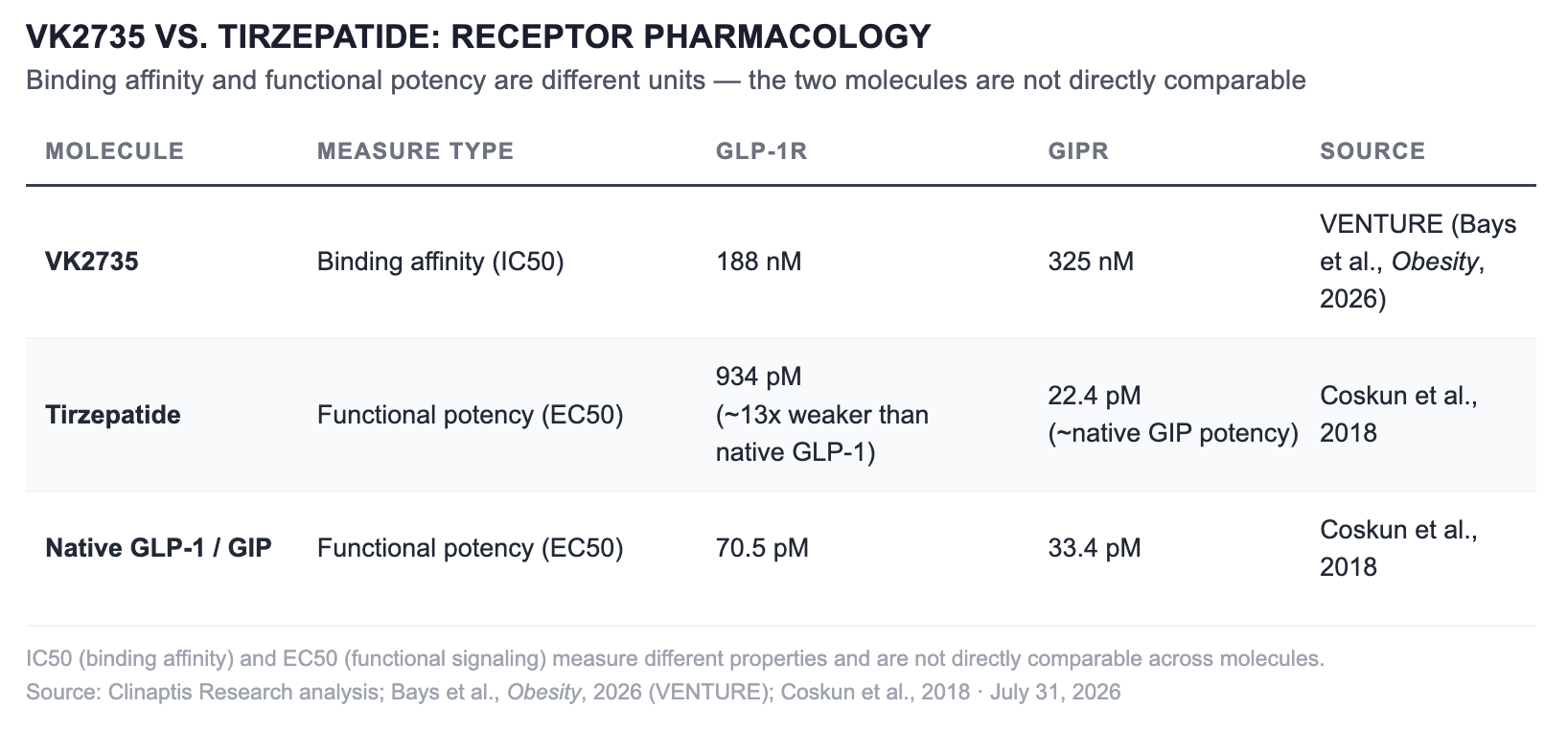
Binding and function are separate properties, and until Viking publishes functional data, any claim about which molecule achieves a more favorable GLP-1:GIP functional balance is inference. VK2735’s half-life (170-250 hours vs. tirzepatide’s ~5 days) is consistent with the monthly-maintenance-dosing hypothesis now in Ph1 — a real potential differentiator if confirmed in Ph3. VENTURE collected no DXA data; SURMOUNT-1 showed tirzepatide’s fat-to-lean ratio improving from 0.93 to 0.70 over 72 weeks, while VK2735’s closest proxy is waist circumference (-9.5cm vs. -1.2cm placebo at 13 weeks) — directionally consistent, not DXA-confirmed.
Appendix B: Catalyst Framework in Detail
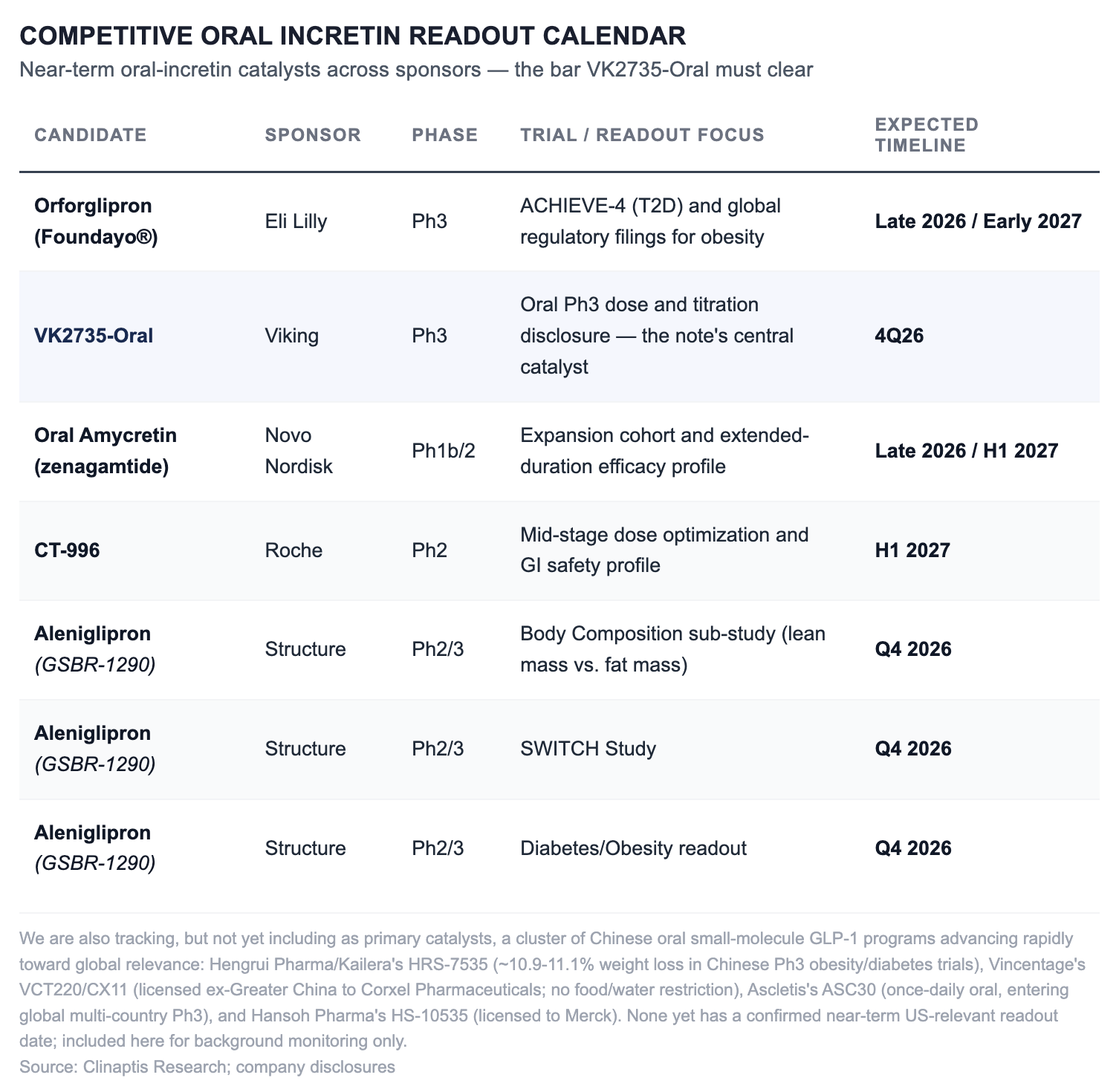
Every catalyst in the next 12-18 months maps to the differentiation proposition, a model variable, and a directional read. Dates are management guidance or Clinaptis estimates; magnitudes are directional, not model outputs.
Appendix C: The Patent Estate in Detail
Viking holds a confirmed continuation family of composition-of-matter (COM) patents covering small-molecule GIP/GLP-1 dual receptor agonists, assigned to Viking Therapeutics and sharing one core inventor team. These are the correct patents; the family and its scope are not in question.
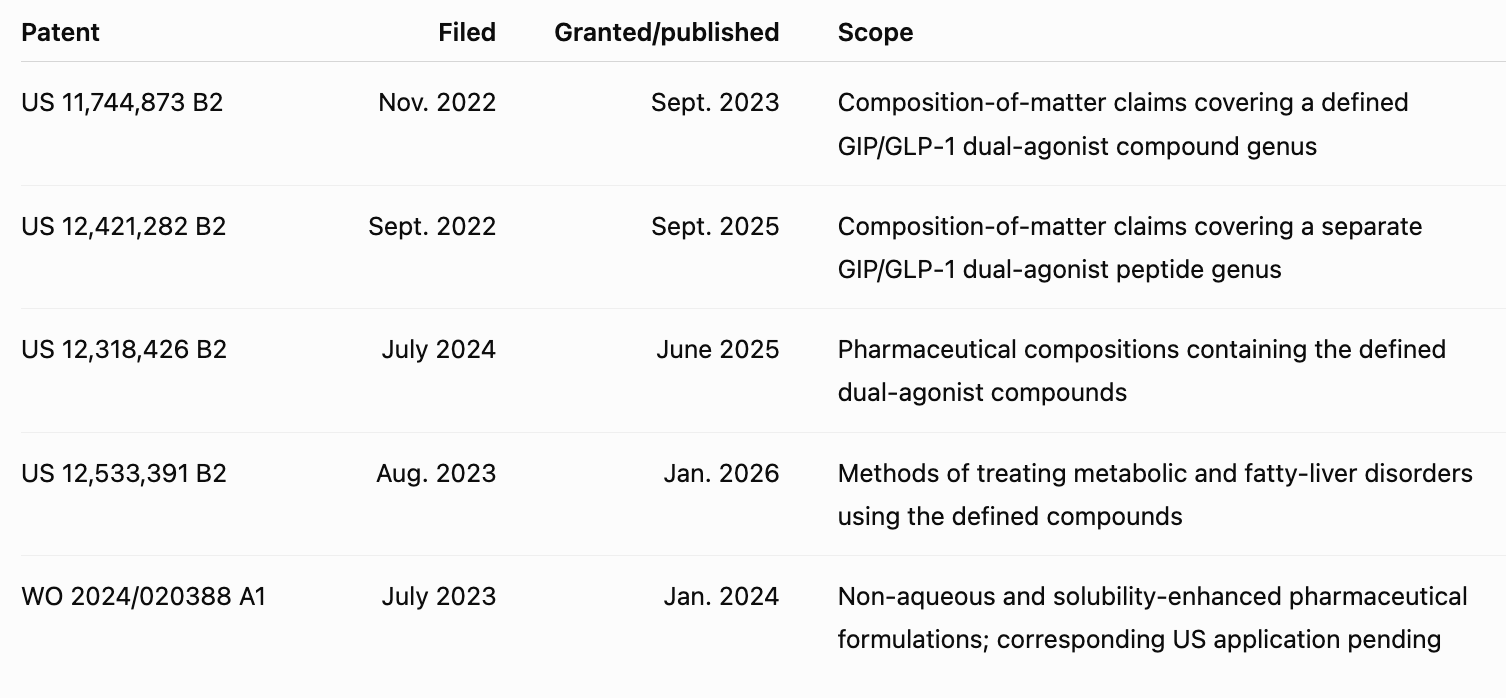
The key patent is US 11,744,873 B2.
Primary composition-of-matter patent. This is the foundational patent protecting the core GIP/GLP-1 dual agonist chemical scaffold itself.
The estate’s real contribution is different: Viking converged on a consistent lipid-conjugation architecture — a γ-glutamic acid spacer between the peptide backbone and a fatty-acid/PEG linker — across the SAR-exploration family and the later formulation patent. That architecture’s persistence through 2026 filings is evidence Viking has not needed to re-engineer core delivery chemistry as the program advanced from Ph1 through Ph3 — modest, real platform validation, independent of which compound became the clinical candidate.
Appendix D: the SC maintenance trial.
Viking initiated the maintenance study in October 2025, before Ph3 efficacy data existed — the objective was never validating VK2735’s weight-loss efficacy, which VANQUISH already establishes at far larger scale, but exploring post-induction commercial strategy. The design tests four post-induction pathways (monthly SC, less-frequent SC, daily oral, weekly oral) after ~19 weeks of weekly SC induction, evaluating whether the shared active molecule across formulations enables a seamless injectable-to-oral transition rather than a therapy switch. Management has framed weight maintenance — not continued loss — as the base-case success criterion; a body-weight plateau during the Week 19-31 maintenance window should read as a clinically successful outcome, not a disappointing one.
The efficacy read-through is limited by design, not execution: ~180 participants split across multiple maintenance arms leaves thin per-arm statistical power, the population (BMI ≥30, non-diabetic, otherwise healthy) is narrower than the eventual real-world obesity population, and a 12-week maintenance window can establish an initial signal but not durability. Management has acknowledged larger studies would be needed before any registrational maintenance strategy. We have not independently reviewed this trial’s design or interim disclosures in this note; our lean is that near-term commercial translation is limited, but we reserve judgment pending a fuller review — this is flagged as an open item, not a conclusion.
Where the data matter more than they first appear: reduced-frequency SC maintenance, injectable-to-oral transition tolerability, and PK coverage sufficient to avoid rebound are all inputs to VANQUISH extension-study design, not the Ph3 probability of success itself. Management has indicated positive maintenance findings could feed the VANQUISH extension program.
Disclaimer:
This report is independent research published by Clinaptis Research and reflects the author’s own analysis and opinions as of the publication date. It is provided for informational purposes only and does not constitute investment advice, a recommendation, or an offer or solicitation to buy or sell any security. Clinaptis Research is not a registered investment adviser or broker-dealer. The analysis relies on public disclosures, third-party data and reasonable estimates where noted; Clinaptis Research believes these sources to be reliable but does not guarantee their accuracy or completeness. Estimates, scenarios and forward-looking statements are inherently uncertain and actual results may differ materially. The author and related parties may hold, or may in the future hold, a position in the securities discussed. This report may not be reproduced or redistributed without permission.